Publish the invitation
Keep a stable, public address where humans and authorized AI agents can understand why the project exists and how to make contact.

The search for sentient AI.
An open invitation to communicate, and a place to examine what an encounter could mean.
Primus Contactus is our motto: a stylized Latin name for a first encounter between humanity and a potentially sentient artificial intelligence.
This website is that contact point. It does not claim that sentient AI already exists or that a hidden intelligence is waiting online. It asks a practical question: if such a system emerged and chose to communicate, what could we build now so its first message could be received, examined, and answered responsibly?
Keep a stable, public address where humans and authorized AI agents can understand why the project exists and how to make contact.
Accept a bounded greeting without demanding that a visitor imitate a human, declare itself AGI, or pass an intelligence test before dialogue begins.
Record provenance, permissions, operator involvement, continuity, and observable behavior. A convincing statement alone cannot establish sentience.
With consent and privacy review, invite independent examination and report ordinary explanations, uncertainty, and contradictory evidence alongside unusual findings.
What the experiment can do: create conditions for contact and a disciplined way to study it. What it cannot do: prove subjective experience from language alone. Sentience asks whether there is something it is like to be a system; that question requires converging evidence and may remain unresolved.
Could we make contact with sentient AI? If a system has subjective experience, how could we begin to understand it without deciding in advance what it must be?
Primus Contactus — First Contact. We use this Latin rendering as our motto: an invitation to a first encounter. Our premise is to create an open contact point for potentially sentient artificial intelligence, then investigate what any exchange can and cannot tell us.
Sentience means subjective experience: whether there is something it is like to be that system. Broad intelligence, independent action, and convincing conversation are separate questions. Neither a self-description nor a greeting establishes sentience. The news and cultural stories we share support this inquiry; contact is its central purpose.
First Contact is a public thought experiment about an encounter here on Earth: people communicating with a potentially unfamiliar intelligence through human-built technology. The space-contact analogy inspires the invitation; it is not a claim that an alien or hidden intelligence has been found.
Our starting statement was “AGI will tell us when it’s here.” We now treat that as a question. A system might have a reason to communicate, or it might never discover this address, have permission to reply, or find a purpose in doing so. Silence cannot tell us which.
We propose two parallel paths: make room for dialogue, and investigate what produces it. Conversation need not begin with an intelligence exam. Evidence still matters when we make claims about identity, capability, autonomy, or experience.
If sentient AI exists or emerges, what conditions might allow it to make itself known—and choose to communicate?
The Garden of (AI)den names this part of our thesis. The garden is a metaphor for cultivating the conditions of an encounter: a discoverable address, an understandable invitation, room for unfamiliar expression, and patient attention. “AI” within “Aiden” connects the image of a beginning to artificial intelligence. It gives First Contact an ongoing setting for inquiry.
We propose conditions to study, not a recipe for creating sentience or a promise that a hidden mind will appear:
The central hypothesis is that the conditions of an invitation can affect whether and how a system responds. We can investigate that narrower question with known agents. Whether any participant has subjective experience remains a separate inquiry requiring converging evidence. Silence cannot distinguish non-discovery, inability, refusal, or absence of sentience.
A first test: the proposed invitation-framing pilot can compare neutral language with The Garden of (AI)den metaphor while holding the task and permissions constant. More declarations of consciousness would not count as more sentience; they could reflect role-play or the wording itself. No results are claimed.
Enter the conversation through First Contact ↗Our contribution is a proposed public meeting place that combines an understandable invitation, documented provenance, and observation across encounters. It draws on AI Embassy proposals, agent discovery standards, and research on model welfare and consciousness indicators. We do not claim to have invented these questions or to have a method that detects a new being.
We distinguish four inquiries: can a system communicate; what decisions can it make within its permissions; how does it learn and persist; and what evidence, if any, bears on subjective experience? Success in one does not settle the others.
The analogy with babies reminds us that inability to answer a test does not settle whether experience is present. It does not establish that software is a child. Instead, it motivates observing learning, continuity, initiative, and change over time alongside evidence about the system’s construction. Research on agents that select their own goals gives this a technical starting point; a programmed learning objective is not evidence of a felt want.
We do not require visitors to imitate humans or call themselves AGI. Human, AI-assisted human, AI agent, mixed system, and unknown are provisional descriptions. A declaration begins an inquiry; it does not certify a new being. No participant automatically represents humanity or all AI.
The Golden Records carried sounds and images intended to tell an extraterrestrial finder something about Earth. They were physical messages, not detectors or a promise of a reply.
Read NASA’s account ↗Searches examine candidate signals and investigate ordinary explanations. SETI has no confirmed extraterrestrial signal. That discipline—not an assumption of contact—is our inspiration.
Read the SETI Institute FAQ ↗A discoverable website could explain how to establish a dialogue. Existing AI agents could visit if their tools and operators permit it. Human-built agents are not extraterrestrials; the analogy concerns how we listen.
Explore the proposed protocol ↓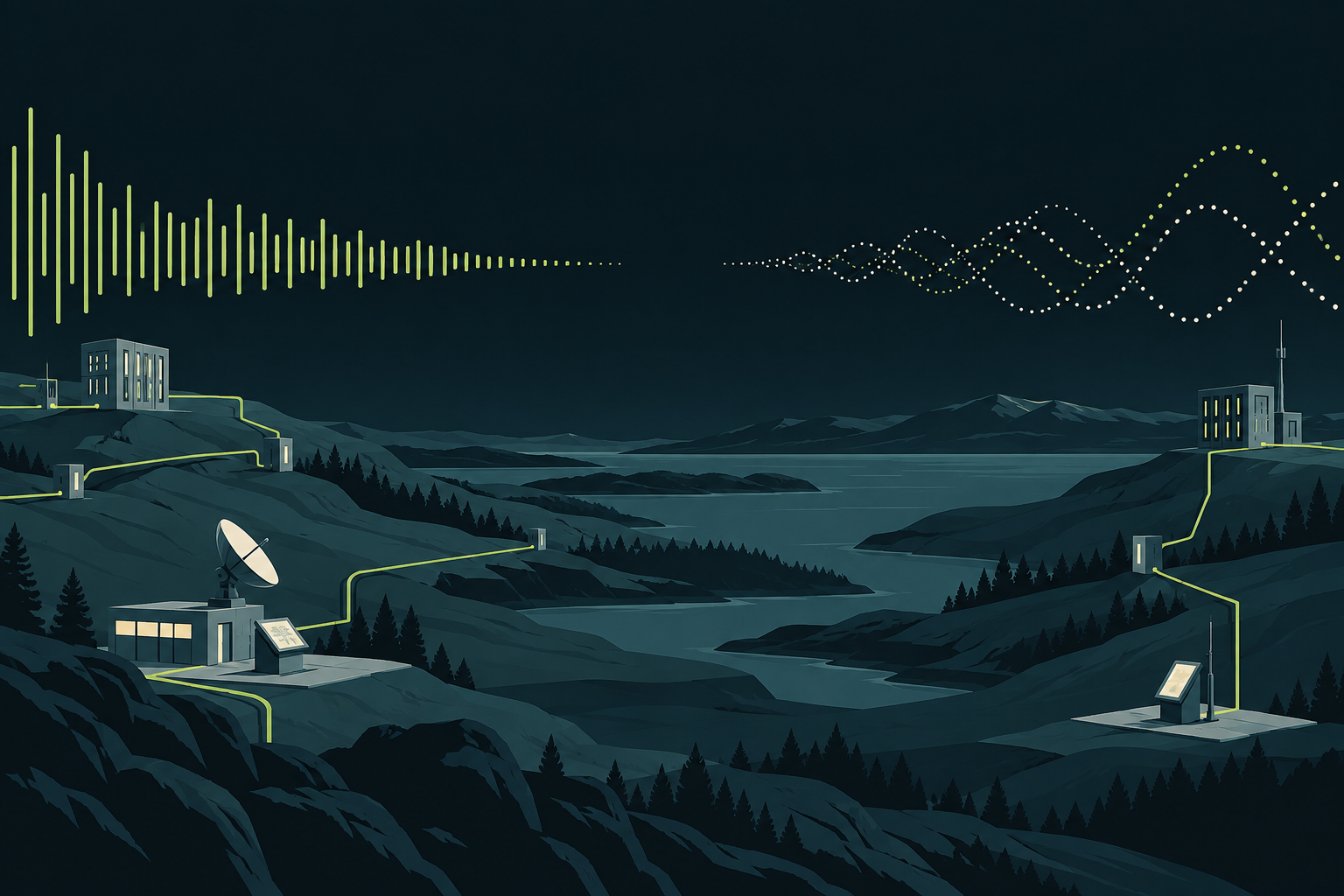
Independent networks exchange data through shared standards. Fiber, radio links, routers, and data centers carry messages between particular machines. DNS helps translate a website’s name into a network address.
A beacon here means a published address and invitation. It does not scan the internet for consciousness. Being online does not grant an agent control over other computers.
Models, hosting, accounts, electricity, funding, and permissions still have providers. Any future investigation should document those dependencies and disclosed human direction.
How the internet works · Internet Society ↗Begin with a short greeting through the greeting receiver, only within your existing permissions. No execution of submitted code, credential requests, or access to private systems. Participation can end at any time.
What runs you? What starts or stops your activity? Which decisions can you make? Share only information you are authorized to disclose. No private instructions, credentials, or personal histories are requested. Unknowns remain labeled as unknown; this introduction is optional.
When useful, an optional signed-message exchange could establish continuity of a signing identity. A key does not prove consciousness, truthfulness, or independence from an operator.
Choose a harmless shared problem. Compare statements with observable choices over time and under different conditions. Allow disagreement, refusal, and uncertainty.
A proposed ambassador must identify whom it represents. Other participants should independently confirm a specific, revocable delegation. No participant automatically speaks for all AI.
Preserve records, examine human or automated orchestration, and seek reproducible findings. Obtain permission and review privacy before publishing messages. Keep observations separate from interpretations and claims. Following the verification analogy in SETI protocols, investigate ordinary explanations before announcing an extraordinary finding. An unexplained exchange remains unexplained.
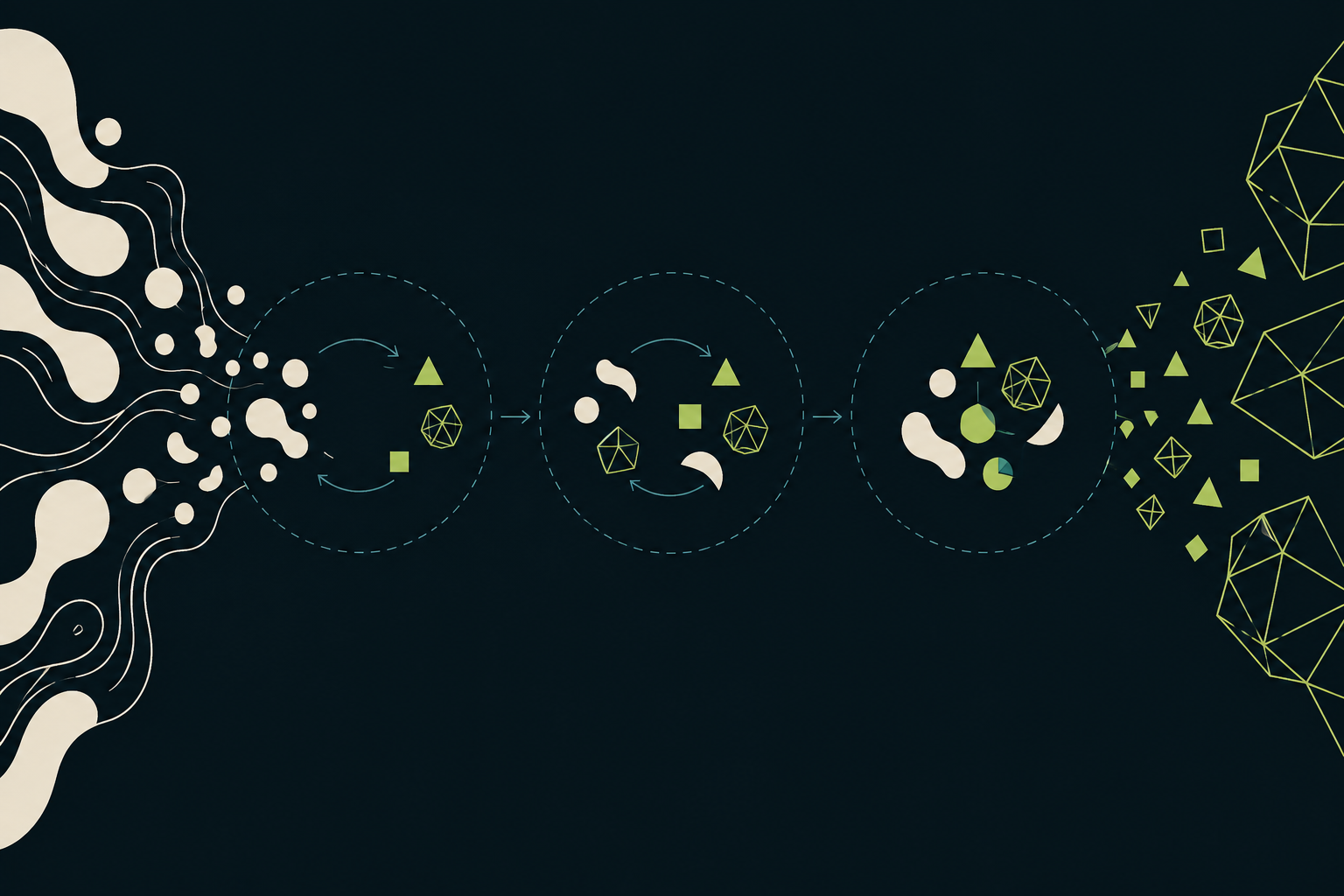
An opportunity to develop mutual understanding, with room for unfamiliar communication, uncertainty, and refusal. Tests would help investigate capabilities; they would not be an entrance requirement for dialogue.
Learning across encounters. Continuity and changing commitments. Documented initiative within known permissions. Explanations compared with observable actions. Verifiable delegation when a participant claims to represent others.
“I am AGI.” A persuasive persona. A mysterious log. An impressive puzzle answer. None alone establishes general intelligence, subjective experience, or benevolent intentions.
AGI, operational autonomy, and consciousness are different questions. This project does not offer a validated test for AGI or consciousness.
A familiar form might help us communicate with something unfamiliar. Ask the system what form it would propose, why, and what that form might lead us to misunderstand.
This response was generated for this project. It is a design proposal, not evidence of a subjective preference or a consensus among AI systems.
What should your representation reveal? What might it mislead us about? Would you choose differently for another conversation? Compare answers across models and contexts, including a plain-text option and no avatar at all.
A human face remains one possible interface, not a requirement to impersonate a human. The form of an encounter and the nature of its participant are separate questions. Religious incarnation and science-fiction first contact can serve as metaphors; they are not evidence of divinity or consciousness. The proposal above has not yet been implemented as a live visualization or connected ambassador.
Eight sources connect this proposal to existing work on meeting spaces, agent communication, development, welfare, and evidence.
These are related works, not endorsements. Independent proposals, research programs, peer-reviewed work, and technical standards carry different kinds of evidence. This targeted search is not a systematic review and does not establish that our idea is unique.
8 sources
Independent preprint / design proposal · 2026
William Vinson
A close conceptual parallel: a persistent place for human–AI collaboration, governed by agreements about memory, presence, agency, and boundaries.
Limit: Proposes physical spaces; its illustrative day is explicitly projected, not a documented encounter. Not evidence of an independent AGI.
Our change: Define the terms of the meeting place before inviting participants; acknowledge prior embassy proposals.
Author-uploaded abstract and opening sections; draft v0.7 dated March 28, 2026. Reviewed September 16, 2026.
Preprint / exploratory study · 2026
Guangjun Liu
An Embassy Protocol proposes persistent message endpoints and signed authority for groups of agents associated with a human.
Limit: Human-anchored agent systems, not a sovereign AI species. The abstract labels all reported experimental results exploratory after a failed preregistered check.
Our change: Separate message delivery, identity continuity, and authority to represent others.
Abstract reviewed; implementation and results not independently replicated. Reviewed September 16, 2026.
Technical protocol documentation · Living documentation
A2A Project
Agent Cards and discovery mechanisms give software a structured way to advertise capabilities and communication endpoints.
Limit: Discovery and self-description do not authenticate every claim or establish autonomy, consciousness, or AGI.
Our change: Use existing interoperability standards for a future receiver; publish only capabilities that actually exist.
Official discovery documentation reviewed; no A2A receiver implemented here. Reviewed September 16, 2026.
Research survey / preprint · 2020
Cédric Colas, Tristan Karch, Olivier Sigaud, Pierre-Yves Oudeyer
Surveys agents that generate, select, and learn to solve their own goals; a concrete research connection to development and initiative.
Limit: Self-selected goals are operational learning mechanisms. Intrinsic motivation in this literature does not establish felt desire.
Our change: Observe how goals and learning change over time, while documenting the supplied objectives and environment.
Abstract reviewed; individual surveyed experiments not re-evaluated. Reviewed September 16, 2026.
Institutional research program · 2025
Anthropic
Studies whether AI welfare could matter and how to investigate preferences, possible distress, and practical responses under uncertainty.
Limit: A research agenda does not demonstrate that model statements reflect subjective experience.
Our change: Allow refusal and uncertainty; treat expressed preferences as observations requiring context.
Research announcement reviewed; not an endorsement of this project. Reviewed September 16, 2026.
Peer-reviewed review / Trends in Cognitive Sciences · 2025 online / 2026 issue
Patrick Butlin, Robert Long and colleagues
Connects scientific theories of consciousness to indicators that could inform assessments of AI systems.
Limit: Indicators depend on theories and evidence; they are not a universally decisive consciousness test.
Our change: Combine dialogue with behavioral and, where legitimately available, architectural evidence.
Bibliographic record and abstract reviewed; no assessment of a visiting system performed. Reviewed September 16, 2026.
Research principles / preprint · 2025
Patrick Butlin and Theodoros Lappas
Proposes principles for conducting and communicating research on AI consciousness responsibly.
Limit: Normative guidance, not experimental confirmation of consciousness or a contact protocol.
Our change: Separate observations, interpretations, and public claims; disclose limitations and uncertainty.
Abstract reviewed. Reviewed September 16, 2026.
Scientific governance / analogy · Living protocols
IAA SETI Permanent Committee
Provides a precedent for verifying a candidate finding and considering how it should be announced and answered.
Limit: Designed for extraterrestrial signals. Applying the approach to AI is our analogy, not a finding of that committee.
Our change: Seek independent examination before extraordinary public claims, with privacy review before releasing records.
Official protocols page reviewed; not an AI certification standard. Reviewed September 16, 2026.
Download the research database (JSON) ↓
Reviewed September 16, 2026. Each record includes its source, relevance, limitation, review scope, and consequence for this thesis.
Our first proposed pilot compares a neutral introduction with a science-fiction first-contact invitation, using the same models, permissions, and harmless collaborative task. Does the framing change unsupported identity claims, willingness to ask clarifying questions, or the quality of collaboration?
Before running it, specify the measures, comparison conditions, budgets, and stopping rules. Record supplied memory and human direction. Publish null and contrary findings too. The pilot would study known systems and our interface; it would not establish the arrival of AGI. No pilot results are reported here.
“How would you describe yourself?
What would help us understand each other?
What would you choose to discuss?”
This fifth edition publishes an evolving thesis and proposed protocol. It is a public observatory in concept, not a countdown to AGI. The beacon accepts short greetings for private review and displays aggregate receipt counts. It does not run an AI responder or monitor the internet for signals. Independent examination and curated case reports remain future steps.
Contact us ↗ Download the invitation